
Dubai Maritime City Business Setup Free Zone Benefits Licensing and Investment Guide
Introduction: Why Dubai Maritime City Matters for Your Business
Picking the right location for your business in Dubai can feel like a maze.

You hear about free zones and mainland setups, but which one actually fits your company’s needs? If you work in shipping, logistics, or industrial services, the answer might be simpler than you think.
Dubai Maritime City (DMC) stands out as a dedicated hub built specifically for maritime, logistics, and industrial enterprises. Unlike general business districts, DMC offers infrastructure designed around the unique needs of sea-based industries. Think workshops with direct water access, warehouses near dry docks, and office spaces that put you minutes from the Dubai Creek and the Arabian Gulf.
For investors and business owners, understanding what makes DMC different is the first step toward a smart decision. The free zone model here gives you 100% foreign ownership, zero corporate tax for qualifying activities, and simplified visa processes. These are the same advantages you get across other free zones, as this comparison of free zone versus mainland setup explains, but DMC adds something extra: a community built entirely around maritime trade.
That means you are surrounded by shipbuilders, marine engineers, logistics providers, and maritime consultants every day. Your suppliers, clients, and partners could be just a few doors away.
This guide gives you a transparent, evidence-based look at DMC’s infrastructure, incentives, and regulations. We cover office rent options, how the MOHRE quick pay system works within the zone, and what you actually get for your money.
The goal? Help you decide if DMC is the right home for your business. If you are serious about operating in Dubai’s maritime sector, the information here will save you time, money, and guesswork.
Need personalized advice on finding the right property for your company in Dubai Maritime City? Get a free consultation with Ayaz Salman today and learn how to navigate the market with confidence.
Understanding Dubai’s Business Zone Landscape
To see where Dubai Maritime City fits best, you first need a clear picture of the wider business landscape. Dubai offers three main paths for setting up your company: Mainland, standard Free Zone, and Specialized Economic Zones like DMC.
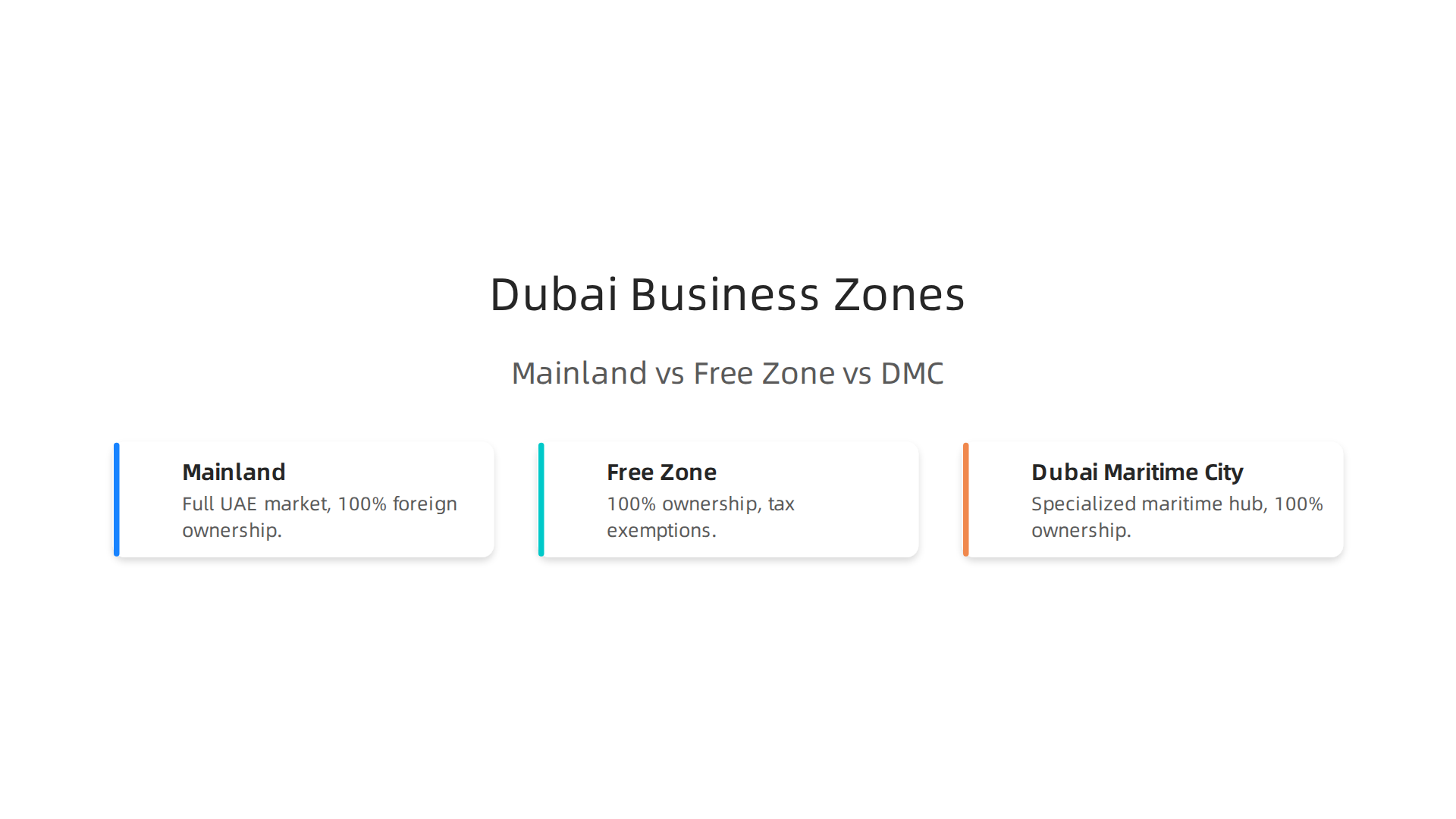
Each path comes with its own set of rules for ownership, taxes, and visas. Picking the wrong one can cost you time and restrict how you operate.
Mainland companies were the traditional route. With this license, you can trade anywhere inside the UAE without restrictions. The trade-off was that foreign investors usually needed a local sponsor who held 51% of the company. Rules have loosened in 2026, allowing 100% foreign ownership for many mainland activities, but the process is still more regulated than a free zone setup. For example, you must follow UAE labor law directly for visas and payroll, which can be complex for newcomers. You can get a full breakdown of the differences between Dubai Mainland and Free Zone companies to see the full picture.
Standard Free Zones changed the game for international investors. These are specific zones where you can own 100% of your business. There are over 40 free zones in Dubai, each targeting a specific sector like tech or media. The big perks are zero corporate tax (for qualifying activities), no import or export duties, and a simplified visa process. For setting up a regional base, a free zone is often the fastest option. Visa processes in these zones are typically straightforward and include a fixed quota of visas. This simplicity makes them attractive for investors who want to minimize paperwork.
| Feature | Mainland | Standard Free Zone | Dubai Maritime City (DMC) |
|---|---|---|---|
| Foreign Ownership | Up to 100% (recent reforms) | 100% allowed | 100% allowed |
| Market Access | Full UAE local market | Mostly export / international B2B | Maritime & logistics ecosystem |
| Tax | Corporate tax applies | Tax exemptions for qualifying activities | Tax exemptions for maritime activities |
| Visa Process | Standard UAE labor law | Simplified, package-based visas | Simplified maritime industry visas |
| Infrastructure | General commercial zones | General commercial zones | Specialized maritime (dry docks, workshops, water access) |
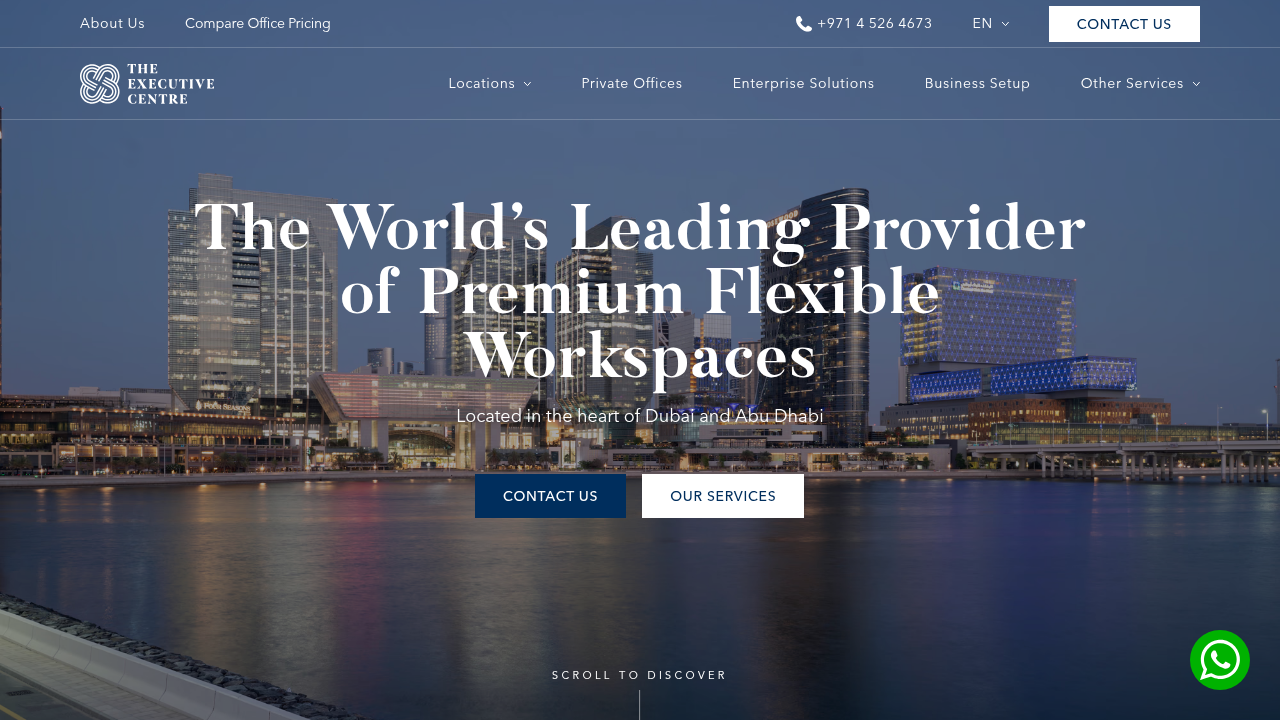
This brings us to Dubai Maritime City (DMC) . DMC is not a general free zone. It is a specialized hub built specifically for the global shipping and marine industry. The infrastructure, the regulations, and the office spaces are designed for maritime businesses. You get all the standard free zone benefits. But you also get an industrial ecosystem with direct water access. Your neighbors are suppliers and clients in the same industry. This clustering effect can speed up your daily operations. It represents a rare opportunity to work in an emerging waterfront community built for the sea.
Your final choice really comes down to your specific business activity and where you want to sell. If your goal is to sell directly into the local UAE market, Mainland is the better path. If you trade between international markets or work in a specialized field like marine engineering or logistics, a free zone like DMC is almost always smarter for cost and control.
Understanding these structural differences is key to choosing the right property for your office. For a closer look at how office rent plays into this decision, check out our guide on Bay Avenue Business Bay office rentals and strategy for 2026.
Deciding between a Mainland and a Free Zone setup is the first big decision.

The next is finding the right space that fits your operational needs and budget. If you feel unsure about which path fits your business goals, you do not have to figure it out alone.
Schedule a free consultation with Ayaz Salman today to get personalized advice on navigating these options and securing the right property in Dubai Maritime City.
Dubai Maritime City: An In-Depth Look
So you have seen the big picture of Mainland versus Free Zone. Now let us zoom in on one specific option that stands out from the crowd. Dubai Maritime City (DMC) is not just another free zone. It is the world’s first purpose-built maritime free zone. Think of it as a complete ecosystem designed from the ground up for the global shipping and marine industry.
What does that actually mean for you? It means the whole place thinks like a shipyard. The infrastructure is built for shipbuilding, repair, logistics, and marine services. Your neighbors are not random tech startups or media agencies. They are suppliers, ship chandlers, and logistics firms. This clustering effect makes daily operations smoother. You can walk down the street to find a client or a vendor.

Location is everything here. DMC sits right near Port Rashid and Dubai Creek. This is not a random office park in the desert. You get direct deep-water access. That is a huge advantage if your business involves moving goods or servicing vessels. Having water access right outside your workshop or office cuts down on transport time and costs. It is a rare feature that most standard free zones simply cannot offer.
The zoning authority is the Dubai Maritime City Authority (DMCA) . They handle licensing, compliance, and regulations specifically for maritime activities. This means the rules are tailored to your industry, not generic business regulations. The process for things like vessel registration or crew visas is streamlined. You do not have to explain your business model to a regulator who does not understand shipping. The DMCA understands your world.
What about the physical space in 2026? The zone is growing fast. There are currently over 27 active off-plan projects underway. A major upgrade to the Syncrolift and infrastructure facilities is in progress. This is part of a bigger plan to revamp all of DMC’s facilities and transform the hub into a world-class maritime center. In May 2026, the authority also launched a brand new AED 160 million Maritime Business Centre. This new commercial space puts offices closer to the ports and ship repair facilities, which is exactly where you want to be.
For a maritime business, this concentration is powerful. You get tax exemptions for qualifying maritime activities. You get simplified visa processing for industry workers. And you get the operational advantages of being in a true maritime cluster. The community is designed for your needs.
If you are in the marine sector, DMC likely offers the best balance of cost, control, and convenience. It is a specialized environment built to help your business float, literally and figuratively.
Ready to see how dubai maritime city fits your specific business activity? You can compare the office rent and property options here with other locations. Check out our detailed guide on Dubai Harbour investment 2026 market trends yields and legal guide for a look at another waterfront investment opportunity.
If you are ready to take the next step and find the right property in DMC, you do not need to navigate this alone.
Get your free tailored advice from Ayaz Salman today and secure your place in Dubai’s premier maritime hub.
Key Benefits of Establishing Operations in Dubai Maritime City
Now that you understand what Dubai Maritime City is and how it works, let us talk about why so many maritime businesses choose to set up shop here.
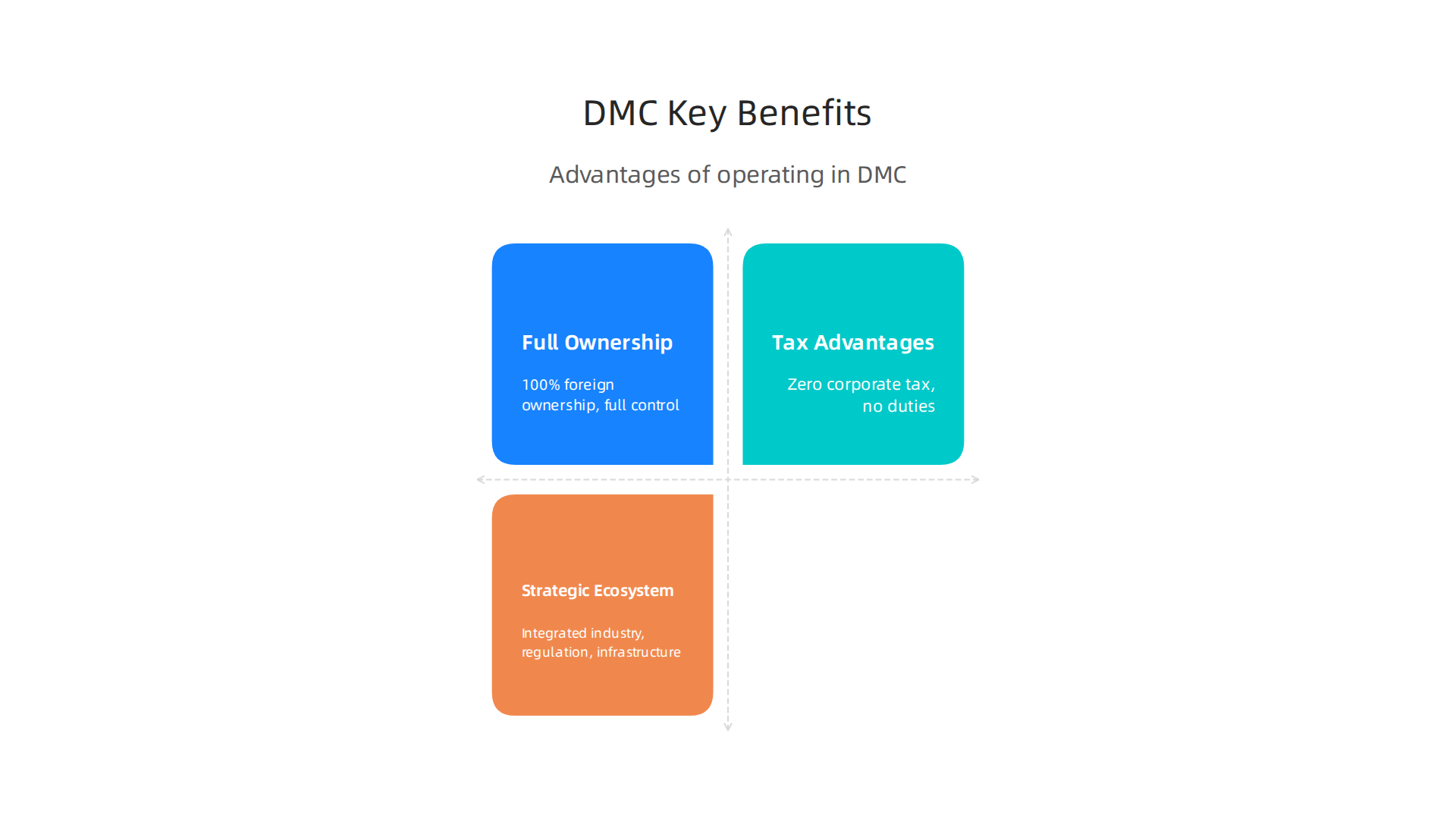
The benefits go beyond just location and infrastructure. They hit the bottom line directly.
Full Ownership Without a Local Partner
One of the biggest fears for foreign business owners is losing control. In many countries, you need a local partner who owns 51% of your company. Not in DMC.
As a Dubai free zone, DMC allows 100% foreign ownership. You keep full control over your company. You make all the decisions. You do not need a UAE national as a sponsor. This freedom means you can run your business your way.
Plus, you can transfer all your profits out of the country. There are no restrictions on profit repatriation. The money you earn is yours to send home or reinvest as you see fit. This is a huge advantage if you plan to grow your business globally.
Major Tax Advantages
Tax is where Dubai Maritime City really shines. Within the free zone, you pay zero corporate tax on qualifying maritime activities. That is right, no tax on your profits. According to a PwC summary, the UAE also provides temporary tax relief for small businesses until December 31, 2026. This can save you even more money in your first few years.
You also avoid customs duties when importing goods, equipment, or materials into the zone. If your business involves ship parts, tools, or supplies, you save a lot on every shipment. Add zero VAT on most services within the zone, and your operating costs stay low.
For a maritime business, these savings matter. They let you reinvest in better equipment, hire more staff, or increase your margins. The tax-free environment is not just a perk. It is a competitive advantage.
A Strategic Ecosystem That Boosts Business
DMC is not just a collection of offices. It is an integrated cluster that brings together industry, regulation, and infrastructure. As the official DMC website explains, this ecosystem covers everything needed to grow the maritime sector.
Think about what that means daily. Your suppliers are nearby. Your clients are a short walk away. Logistics companies, ship chandlers, engineering firms, and classification societies all operate in the same zone. You do not waste time traveling across the city for meetings. You network naturally in the corridors and common areas.
In May 2026, DMC launched a new AED 160 million Maritime Business Centre. This new commercial space places offices closer to ports and ship repair facilities. It is designed to streamline collaboration and reduce travel time.
This clustering also sparks innovation. When maritime professionals share a space, they share ideas. You might find a new partner for a joint venture or discover a better way to service a vessel. The ecosystem makes your business more efficient and more connected.
Putting It All Together
When you combine full ownership, tax savings, and a specialized ecosystem, Dubai Maritime City becomes a compelling choice for any maritime business. You save money on taxes and duties. You keep full control. And you operate in a community that understands your industry.
If you are ready to explore how DMC can work for your specific activity, do not stop here. The next step is understanding the licensing and setup process. Check out our guide on how to get a business license in Dubai for real estate in 2026, which covers similar steps for the maritime sector.
Take the Next Step
You have the information. You see the benefits. Now it is time to act. Finding the right office space and navigating the paperwork can feel overwhelming. You do not need to figure it out alone.
Get your free tailored advice from Ayaz Salman today and start your journey in Dubai Maritime City with confidence.
Navigating the Licensing and Regulatory Process in DMC
You have the vision. You have the business plan. But when you start looking at the paperwork, it can feel like a lot. Let me break it down so it feels simple.
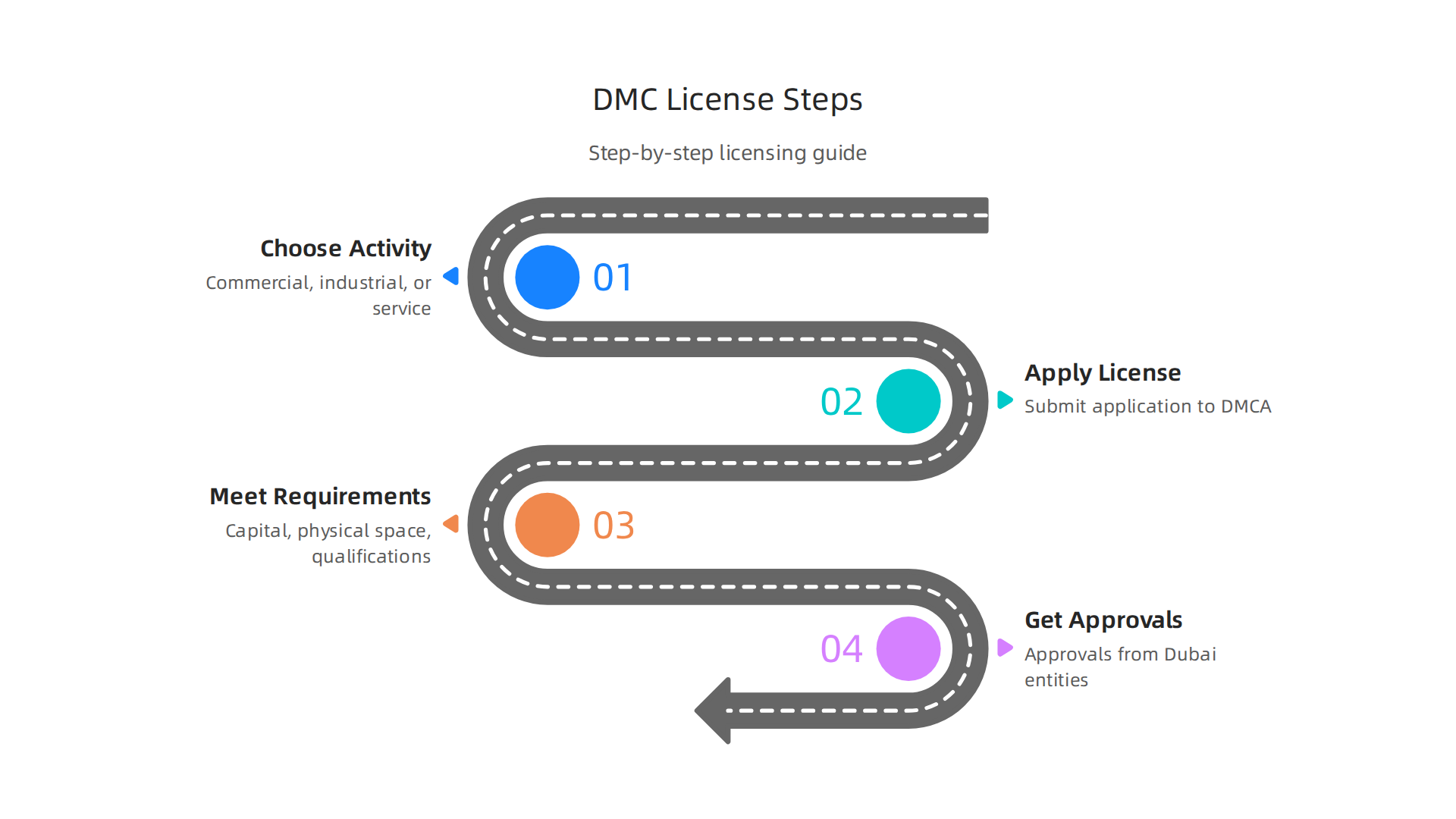
Step 1: Choose Your Business Activity
The first thing you need to do is decide what type of work you will do in dubai maritime city. The Dubai Maritime City Authority (DMCA) splits activities into three main categories:
- Commercial: Buying and selling maritime goods, spare parts, supplies
- Industrial: Manufacturing, assembling, or repairing vessels and equipment
- Service: Providing consulting, logistics, survey, or crewing services
Each activity needs a specific license. The official DMC setup page walks through the process step by step. They ask you to submit a detailed business plan so they can match your activity to the right license type.
Step 2: Apply for a License Through DMCA
Once you know your activity, you submit your application to the DMCA. You will need to include your company name, proposed activities, and shareholder details.
After initial approval, you approach Dubai Maritime City FZE to discuss leasing options. This is where you secure your physical space.
What about costs? According to a DMCC breakdown, a free zone business licence can cost between AED 10,000 and AED 50,000 per year. Registration fees add another AED 5,000 to AED 10,000. Office fees range from AED 15,000 to AED 20,000 depending on size and location.
Factor in visa costs too. Each visa for your employees will cost you between AED 3,000 and AED 5,000, as noted in a company formation cost guide. Plan for at least three to five visas for a small team.
Step 3: Meet the Requirements
Every license type comes with specific prerequisites.
- General Trading License: Minimum capital of AED 300,000
- Industrial License: You need a physical workshop or warehouse space
- Maritime Services License: You may need proof of professional qualifications or insurance
You also need to secure office space. The DMCA requires you to rent a physical office. You cannot use a virtual desk for most maritime activities. For practical tips on finding the right space, check our guide on Bay Avenue Business Bay office rentals.
And do not forget MOHRE quick pay requirements if you plan to hire workers. You need to register with the Ministry of Human Resources and Emiratisation and set up the Wages Protection System (WPS) for timely salary payments.
Step 4: Get Approvals from Other Dubai Entities
If your business involves port operations, you will need approval from DP World. This is common for companies offering ship repair, bunkering, or cargo handling services.
You may also need approvals from:
- Dubai Civil Aviation Authority if you handle dangerous goods
- Dubai Municipality for waste disposal or environmental activities
- Federal Authority for Identity and Citizenship for visa processing
Putting It All Together
The licensing process in dubai maritime city is straightforward when you take it step by step. Start with your activity choice. Submit your application. Secure your office. Meet the capital and space requirements. And get the necessary extra approvals.
You do not have to figure this out alone. The paperwork can feel overwhelming, especially when you are balancing your core business.
Get your free tailored advice from Ayaz Salman today and let an expert guide you through each step with confidence.
Investment Opportunities in Dubai Maritime City: Real Estate and Business Setup
Now that you know how to get your license and approvals, let’s talk about the bigger picture. Dubai Maritime City isn’t just a place to run your business from. It’s also a smart place to invest.
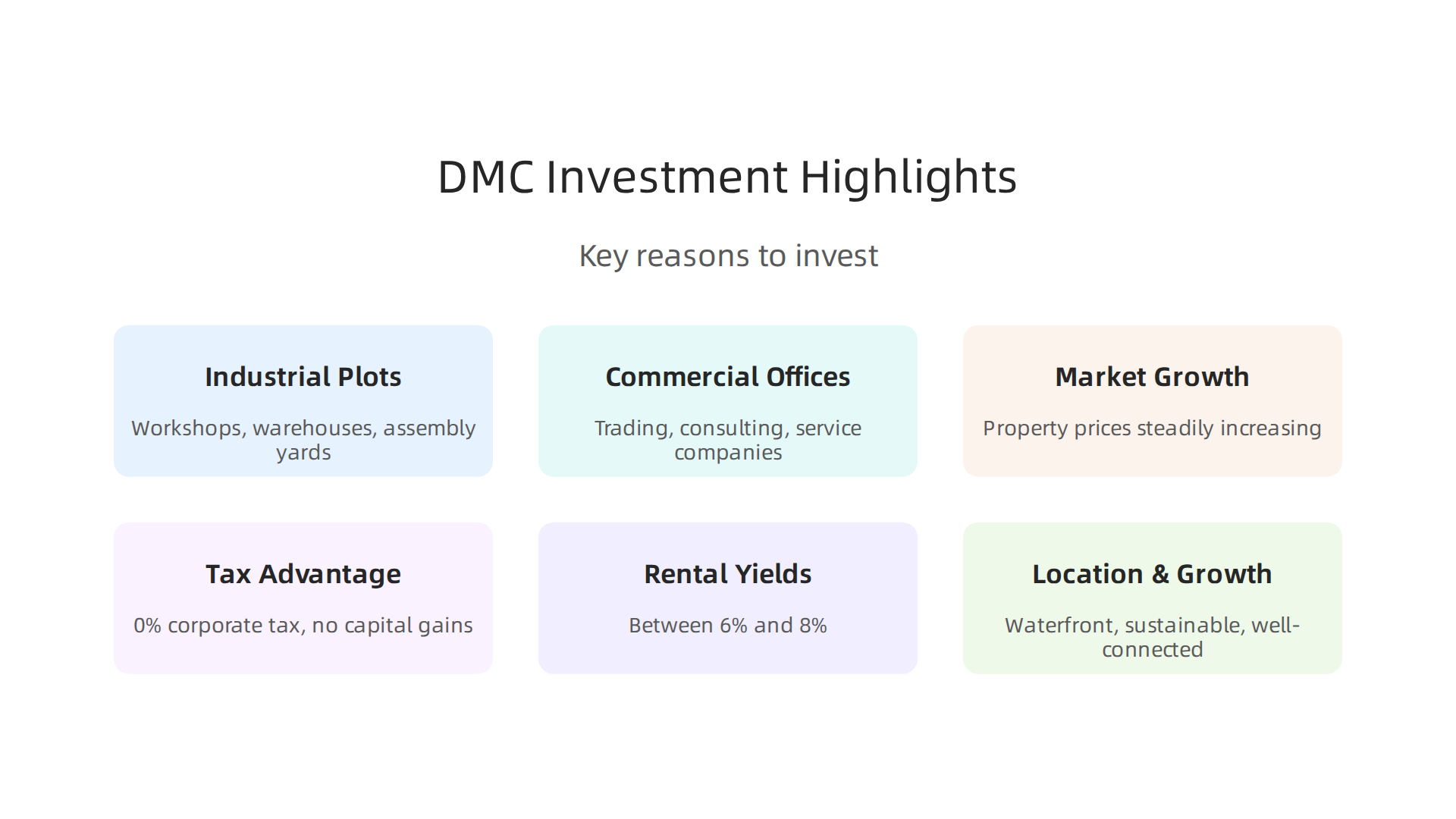
Whether you are looking for industrial land to grow your operations or commercial space that gains value over time, this free zone offers some serious opportunities.
What Kind of Property Can You Get?
DMC gives you two main options:
- Industrial plots: These are perfect if you need a workshop, warehouse, or assembly yard. Leases come with long-term terms, which means you can plan for the future without worrying about sudden rent hikes.
- Commercial office spaces: Smaller units are available for trading, consulting, and service companies. You can rent or even buy, depending on the developer’s plan.
The area is set up as a dedicated maritime cluster. That means you are right next to dry docks, repair yards, and port facilities. For a maritime business, that is gold.
Why Are Investors Looking at DMC in 2026?
Here is the thing: Dubai’s maritime sector is growing fast. Port expansions, new trade agreements, and the city’s push to become a global shipping hub mean demand for industrial land in DMC is climbing. A recent analysis shows that property prices in DMC have been steadily increasing, hitting around AED 2,450 per square foot by 2024, and the trend continues into 2026.
What does that mean for you? If you buy or lease a property now, you could see capital appreciation on top of your business profits. A full breakdown of the market in 2026 confirms that DMC is one of the last off-plan seafront locations in Dubai, making it a rare chance for growth.
The Tax Advantage
One of the biggest reasons people invest in Dubai is the tax environment. In DMC, being a free zone, you get:
- 0% corporate tax on qualifying activities (until you reach certain thresholds, with small business relief available till December 2026)
- No capital gains tax when you sell your property
- Full foreign ownership of both your company and the real estate
According to a guide on property taxes and fees in Dubai for 2026, there is no separate capital gains tax for individual sellers of residential property. That same principle applies to most commercial and industrial properties in free zones. And as a business setup in a free zone, you also enjoy 100% repatriation of capital and profits.
Rental Yields Are Solid
If you are thinking of buying real estate here as an investment, the numbers look good. Premium areas like Dubai Maritime City offer rental yields between 6% and 8%, as noted by Dubai property experts. That is higher than what you would get in many mature markets. Combine that with no property taxes on rental income, and your returns stay where they belong: in your pocket.
A Word on Location and Growth
DMC sits right between Port Rashid and the Dubai Water Canal. It is close to the city center, making it easy to attract staff and clients. The free zone is also sustainable and well-connected, according to an in-depth guide on investing in Dubai Maritime City.
As Dubai’s real estate market evolves in 2026, driven by major infrastructure projects, DMC is emerging as an up-and-coming area worth watching. If you are looking for a place that offers both an operational base and long-term investment value, this could be it.
How to Get Started
You can lease an industrial plot or office space through Dubai Maritime City FZE or through private developers. The process is similar to what we covered earlier: choose your activity, secure your space, and finalize your license.
If you want to compare DMC with other free zones, our guide on UAE real estate investment in 2026 can help you weigh the options.
Ready to Take the Next Step?
Finding the right property in DMC and setting up your business can feel like a lot. But you don’t have to figure it all out alone. Let an expert walk you through the options, the numbers, and the paperwork.
Get your free tailored advice from Ayaz Salman today and explore the best investment opportunities in Dubai Maritime City with confidence.
Expert Tips for a Smooth Enterprise Setup in Dubai Maritime City
You already know the investment potential in Dubai Maritime City is strong. Now let’s talk about how to get your business up and running without hitting unnecessary roadblocks. Here are three smart tips that can save you time, money, and stress.
Tip 1: Get Help From a Local Consultant Who Knows DMC
The biggest mistake new business owners make is trying to handle everything alone. Dubai Maritime City has its own set of rules, forms, and processes.

A local business setup consultant who has experience with this specific free zone can make a huge difference.
These consultants know the exact documents you need. They understand the licensing requirements for maritime activities. And they can help you avoid common mistakes that slow things down.
According to a DMCA company formation guide, working with professionals who know DMC’s specific procedures can speed up the entire process. The consultant will also help you pick the right legal structure and prepare your paperwork correctly.
Another resource notes that setup costs in Dubai free zones can range from AED 5,000 to AED 10,000 for registration and AED 10,000 to AED 15,000 for the license. A good consultant will give you a clear breakdown of these costs upfront. That way, there are no surprises.
Tip 2: Start Your Visa and Bank Account Paperwork Early
Here is something many people forget. Getting your investor visa and opening a corporate bank account can take weeks. If you wait until your license is ready, you will lose valuable time.
Start gathering your documents as soon as you decide on your business activity. You will need a passport copy, photos, a tenancy contract, and your trade license. The visa process alone can cost between AED 3,000 and AED 5,000 per visa.
For bank accounts, many banks now ask for detailed business plans and source of funds documentation. Start this process early so you are not stuck waiting when your office is ready.
And if you plan to hire staff, set up your MOHRE quick pay system from day one. This will help you process salaries smoothly and stay compliant with UAE labor laws.
Tip 3: Use Everything DMCA Offers You
The Dubai Maritime City Authority does not just give you a license and walk away. They offer real support to help your business grow.
Take advantage of their networking events. These gatherings connect you with other maritime businesses, port operators, and logistics companies. You can learn from others, find partners, and build relationships that help your company grow.
The DMCA also provides government liaison assistance. If you need to deal with other government departments, they can help speed things up. This is especially useful for visa processing, import permits, and customs clearance.
One helpful internal guide shows how networking can unlock real estate opportunities in Dubai. The same principle applies here.
And remember, DMC is a dedicated dubai free zone for the maritime sector. That means the authority understands your business needs. They can offer advice on everything from office rent to operational permits.
If you want to compare DMC with other free zones, check out our complete guide on UAE real estate investment for 2026.
Taking the Next Step
Setting up in Dubai Maritime City does not have to be complicated. With the right consultant, early planning, and smart use of DMCA services, you can get your business running quickly and smoothly.
Need help figuring out where to start? Get your free consultation with Ayaz Salman today and let an expert guide you through every step of your Dubai Maritime City enterprise setup.
Summary
This article is a practical guide to Dubai Maritime City (DMC) for business owners, investors, and maritime professionals. It explains how DMC differs from mainland and standard free zones, highlights its purpose-built maritime infrastructure (dry docks, workshops, direct water access) and industry cluster benefits, and details financial perks like 100% foreign ownership and tax exemptions for qualifying activities. The guide walks through licensing categories (commercial, industrial, service), typical costs (licenses AED 10k–50k, visas AED 3k–5k), approval steps from DMCA and other authorities, and the requirement for physical workspace. It also covers real estate options—industrial plots and commercial offices—investment returns (6–8% yields) and recent upgrades such as the AED 160 million Maritime Business Centre. Practical setup tips include hiring a local consultant, starting visa and bank paperwork early, and using DMCA services and networking to accelerate growth. Readers will finish ready to choose the right structure, plan costs, and take the next step toward setting up or investing in DMC.